
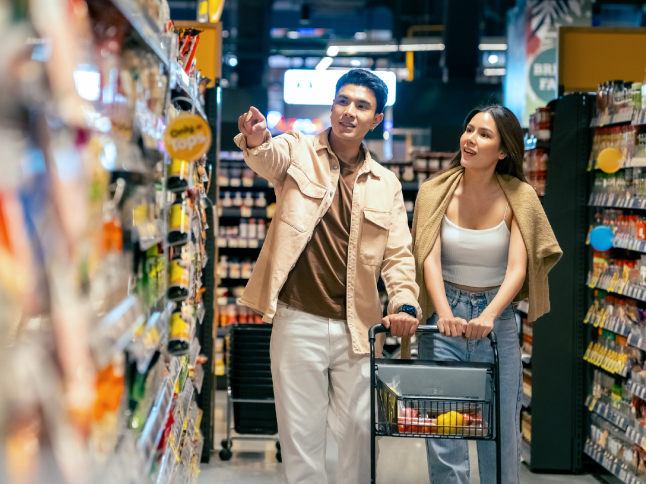
From the moment a customer enters a grocery store, its layout shapes the shopping experience: what shoppers notice first, how easily they find familiar favorites, and which new foods they consider trying.
According to research from the University of Southern California, three out of four grocery shoppers make in-store purchasing decisions beyond their pre-trip plans. A thoughtful grocery store layout gives products more opportunities to earn consideration while providing customers with a convenient, intuitive, and rewarding experience.
In this blog, we break down grocery store layout from the top down, starting with major department placement, then taking an up-close look at the arrangement of individual shelves, with practical tips for optimizing display space and strengthening shelf appeal.
The Psychology of Grocery Store Layout
Shoppers take cues from the surrounding food assortment, and these cues influence which products receive their attention. Layout is a fundamental aspect of grocery store marketing that directly influences:
-
First impressions. The departments and displays near the entrance create an initial impression of the store’s freshness and variety while giving selected products early visibility.
-
How shoppers associate foods. A cheese assortment displayed near crackers may suggest an easy entertaining option, while the same products beside prepared sandwiches may register as a lunch accompaniment. Placement helps shoppers connect products with meals, occasions, and complementary purchases.
-
Which new products shoppers will discover while browsing. Foods positioned along common routes or near popular destinations can reach customers who were not actively looking for them. Products tucked into a dedicated aisle may depend more heavily on shoppers seeking out that category.
-
Store brand perception. Prominent fresh-food displays can reinforce a reputation for quality and healthiness, while accessible meal solutions can position the store as a convenient alternative to takeout.
-
Shopping trip convenience. Clear sightlines, logical department placement, and easy access to everyday staples help customers shop efficiently. Crowded displays or confusing arrangements can make even a short list feel like work.
The Importance of Planned Versus Unplanned Purchases
Many shoppers enter the store with specific purchases in mind. Those plans determine their route and, consequently, which other products have a chance to catch their attention. A product may fit neatly into its designated category but receive little exposure to customers whose shopping lists never take them down that aisle.
Layout can help connect those planned purchases with additional possibilities. For example, a refrigerated display of prepared salads along the route to a popular magnet like rotisserie chickens can suggest an easy way to complete dinner (even for a customer who has no intention of walking to the produce section).
Even when it doesn’t result in an immediate sale, that exposure can influence a future visit. A customer heading for a familiar favorite may notice a new range of snack packs or prepared entrées without buying one immediately. Making those products visible along well-traveled routes helps shoppers learn what the store offers, giving them another option to remember the next time they need a quick lunch or dinner.
Supermarket Store Layout Concepts Explained
While a grocery store layout must be tailored based on store size, context, and target market, the concepts below illustrate representative layout concepts for a prototypical American supermarket.
Grocery Store Perimeter vs. Interior Aisles
-
The perimeter: The outer edges of the store commonly house produce, bakery, deli, meat, seafood, and dairy departments. These areas help establish the store’s fresh-food identity and often include service counters and prepared-food offerings that can distinguish one grocer from another.
-
The interior aisles: The center of the store typically organizes packaged foods, household supplies, and other staples into clearly defined categories. This arrangement supports efficient stocking and helps shoppers locate and compare products, with aisle signage guiding them toward specific needs.
Strategic Grocery Store Departments
-
The entrance and opening displays: Produce, flowers, or seasonal assortments often welcome customers into the store. Their colors, variety, and presentation create an immediate impression of freshness and give retailers an opportunity to establish seasonal themes.
-
Destination departments: Popular categories such as dairy, meat, and deli draw shoppers to specific parts of the store. Their placement helps shape traffic patterns, giving nearby displays opportunities to introduce complementary products. Refrigeration, shipping/receiving access, and replenishment needs also constrain where these departments can be located.
-
Endcaps and secondary displays: Endcaps occupy the ends of aisles, while freestanding displays and other dynamic product placements create merchandising opportunities elsewhere in the store. These spaces can highlight promotions, seasonal products, or new offerings outside their usual category location.
-
Cross-merchandising areas: Grouping related products helps customers shop around a meal or occasion. Pasta beside sauce, dips near cut vegetables, or prepared sides near cooked entrées can make useful combinations easier to recognize and purchase.
-
Grab-and-go sections: Dedicated displays of sandwiches, salads, snack packs, and prepared meals serve customers looking for a quick food solution. Accessible placement can help these shoppers in the booming grab-and-go market quickly complete their visit.
Supporting Store Areas
-
Pharmacy and wellness areas: An in-store pharmacy gives customers another reason to visit and may bring them in outside their usual grocery routine. Nearby health, personal-care, and wellness categories can make related purchases convenient, while clear access helps customers reach the pharmacy without navigating the entire store.
-
Cafés and coffee counters: Coffee, beverages, and light food service can support breakfast visits, afternoon stops, and other occasions beyond routine grocery shopping. Placement near an entrance or bakery can make the café easy to access and connect it with complementary offerings.
-
Seating and dining areas: Comfortable space to enjoy prepared foods can make the store a destination for lunch, a coffee break, or a casual meeting. Locating seating near foodservice counters and grab-and-go displays helps customers move easily from choosing a meal to eating it, while keeping tables clear of primary shopping routes.
-
Checkout and queuing areas: The final stage of the shopping route often features compact, easy-to-select products such as beverages and snacks. Displays here need to balance visibility with enough room for customers to queue, unload baskets, and move comfortably.
The right arrangement depends on the store’s footprint, service model, and customers. A neighborhood bodega serving frequent quick trips will organize these areas differently from a larger box store built around weekly household shopping.
Grocery Store Arrangement: From Store Experience to Shelf-Appeal
While the store layout brings a shopper to a given shelf, the arrangement of products on that shelf determines what happens next. Shoppers need to be able to quickly understand the selection, compare their options, and reach the product they want.
An effective arrangement needs to address:
-
Grouping that gives the assortment a logic customers can follow. Keeping related products together helps shoppers compare flavors, portions, and prices without searching across a display.
-
Space allocation that determines how much attention each offering receives. Giving a product multiple “facings,” or units visible side by side at the front of the shelf, makes it more prominent and provides room for additional stock behind it. That creates a practical trade-off: expanding one product’s presence leaves less space for assortment breadth. Retailers need to balance visibility and variety with how quickly each item sells and how often employees can replenish it
-
The display also needs to work physically. Shelf spacing should accommodate product height without leaving excessive unused space, while deeper rows and stacked arrangements should allow customers to remove an item comfortably.
-
Products should remain easy to identify as the display sells down, with clear price labels and orderly rows helping shoppers navigate gaps in the assortment.
These decisions establish the conditions for strong shelf appeal. Once products have the right position, space, and relationship to neighboring items, their individual packaging presentation helps shoppers judge which option looks freshest, most satisfying, and ultimately worth the price.
Food Packaging and Shelf Appeal
Packaging has a measurable role in the purchase decision: 72% of Americans agree that packaging design influenced their purchase decisions. This influence is not superficial. Food packaging plays a key role in showing customers the core attributes of the quality product inside.
Choosing the right packaging has a direct impact on:
-
Shelf appeal that puts the food first. Clear packaging and thoughtfully positioned labels let colorful ingredients, generous fillings, and carefully arranged portions attract attention. Container shape and orientation should suit the display, whether customers view the food at eye level or look down into a refrigerated case.
-
Stackability and efficient use of space. Containers that stack securely and fit shelf dimensions help retailers build orderly displays and keep more units available. Compatible footprints across different formats can also simplify shelf planning as portions, recipes, and seasonal offerings change.
-
A premium presentation. Clean lines, consistent shapes, and compartments that keep ingredients neatly separated can make a prepared meal feel worth its price. A coordinated packaging family can extend that impression across an assortment, helping private-label foods look recognizable and thoughtfully presented.
-
Visible tamper evidence. Customers buying a ready-to-eat salad, sandwich, or snack pack need confidence that it has remained protected throughout stocking and handling. An intact closure that clearly indicates whether the package has been opened provides reassurance at the moment of selection.
-
Shelf-life protection. Packaging matched to the food’s moisture, oxygen, and sealing requirements helps preserve the taste, texture, and appearance shoppers expect. A longer selling window can also reduce spoilage and markdowns while giving retailers more flexibility around deliveries and replenishment.
For a practical playbook on packaging, presentation, and shopper perception, explore The Science of Shelf Appeal: How To Create Packaging That Captures Attention.
Food Packaging and Operations
Behind the scenes, attractive displays depend on a packaging process that keeps products moving. A display loses its value when popular items are regularly missing, or employees struggle to replenish it before the lunch rush. For that reason, formats that work efficiently with filling, sealing, and labeling processes are also key for the customer’s in-store experience.
Versatile containers that accommodate multiple recipes can reduce the need for packaging changes, while compatibility with manual or automated operations helps match the format to how food is actually prepared. Connecting these production needs with shelf planning makes it easier to maintain a fresh, consistent display throughout the day while reducing the operational burden of seasonal product changeouts.
Grocery Store Layout Tips
A few practical principles can help retailers turn shopper attention into stronger merchandising opportunities:
-
Give endcaps a clear purpose. The ends of aisles provide visibility beyond the products stocked within them. Use these displays to highlight seasonal offerings, introduce new items, or bring together products around a meal or occasion.
-
Position priority products where shoppers can easily see them. Eye-level placement can help draw attention to products that support merchandising goals, whether that means a premium private-label line or a promising new offering. Consider the shopper’s viewing angle when arranging both shelves and displays.
-
Use color to make displays easier to understand. Coordinated colors can help shoppers recognize a category, distinguish flavors, or identify a seasonal assortment. Keep the overall presentation clear enough that individual products and their labels remain easy to see.
-
Make purchase-driving information visible. Shoppers may be looking for nutritional information, sustainable packaging design, local products, or organic options. Arrange packages so relevant labels face outward, and use concise shelf signage to help customers find the qualities they value.
-
Let the food be part of the display. Clear packaging gives shoppers a direct view of ingredients, colors, and textures. Orient containers so their most appealing features are visible, and avoid hiding the food behind shelf signage or overlapping products.
How Packaging Innovation Can Support Store Layout
Packaging innovation can give retailers new ways to execute a store layout strategy. Lacerta’s Seal N’ Flip® provides an example. Food is plated, film-sealed, and flipped, placing the film underneath a clear, rigid surface.
That change in orientation gives sandwiches, wraps, and snacks a premium presentation, letting the food’s colors and ingredients contribute to the display, while tamper evidence reinforces confidence in selecting ready-to-eat foods. Streamlined lidding dimensions and standard compatibility with standard lidding equipment, which helps keep packaging operations manageable as offerings change. Compared with similar-sized clamshells, Seal N’ Flip uses up to 50% less plastic and offers up to 25% potential savings in material cost.
Learn More About Tailoring Packaging to Grocery Store Layout Strategy
A successful grocery store layout connects the way customers shop with the foods you want them to discover. Packaging helps complete that connection, giving each product a presentation that fits the display, highlights its appeal, and supports efficient use of shelf space.
Lacerta works with retailers and food producers to bring these considerations into packaging decisions from the beginning. From versatile stock containers to custom designs, our team can help align your packaging with your assortment, operations, and merchandising goals.
For fresh-food programs with varied products and portion sizes, Puzzle Pack™ can help integrate these goals in a modular, stackable packaging family.
Puzzle Pack is a coordinated system of food containers designed to fit together on the shelf. The collection includes different formats for foods and portion sizes, with common shelf-facing dimensions and stackable designs that let retailers arrange them together in orderly rows and stacks. Its bento-inspired presentation gives the assortment a clean, consistent appearance.
That shared geometry makes packaging part of shelf planning from the start. Retailers can determine how different containers will fit within a display, allocate space across products, and adjust the mix without working around an assortment of unrelated package shapes. Individual snacks, grab-and-go meals, and larger prepared offerings can each have an appropriate format while retaining the recognizable look of one packaging family.
Explore Puzzle Pack™ here, or contact our team to discuss packaging that fits your next merchandising opportunity.
Frequently Asked Questions
What Is a Typical Grocery Store Layout?
Many supermarkets place fresh-food departments around the perimeter and packaged foods and household staples in the interior aisles. Endcaps, seasonal displays, and grab-and-go sections create additional opportunities for product discovery along common shopping routes.
How Does Grocery Store Layout Influence Purchasing Decisions?
Layout affects which products shoppers encounter, what they associate with those products, and how easily they find what they need. Placing complementary foods together can suggest a meal idea, while displays near popular departments can introduce products customers were not actively seeking.
What Is the Difference Between Store Layout and Shelf Optimization?
Store layout organizes departments, aisles, and traffic flow across the building. Shelf optimization focuses on how individual products fit, face, and appear within a display. Both help shoppers navigate the assortment and recognize products worth considering.
How Can Grocery Stores Improve Grab-and-Go Displays?
Make the section easy to find, group foods around relevant meals or occasions, and keep products and labels clearly visible. Match the assortment to available space and replenishment capacity so the display stays organized and stocked during busy periods.
How Does Food Packaging Help Optimize Shelf Space?
Packaging dimensions, orientation, and stackability influence how many products fit and how clearly shoppers can see them. Coordinated packaging families with common shelf-facing dimensions can simplify display planning and help retailers accommodate different foods and portions while maintaining a consistent presentation.

