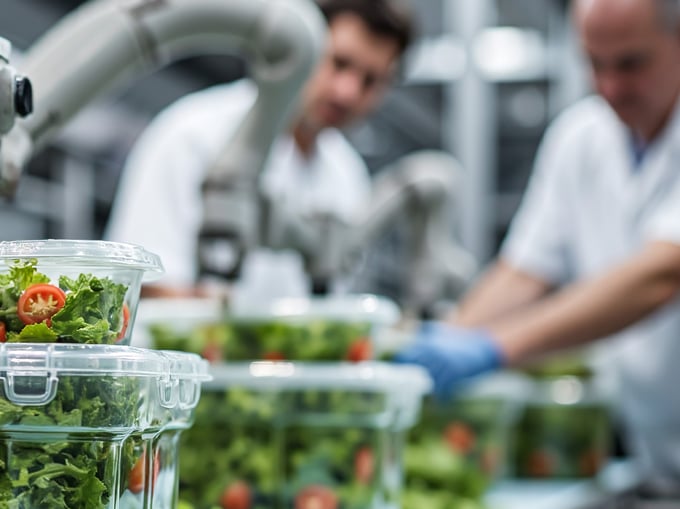
Food packaging plays a decisive role in the success or failure of a food product. That’s because packaging has to protect the food, present it appealingly, fit storage and retail operations requirements, and align with customers’ price expectations.
The right choice depends on how the product moves through the supply chain, how it appears on the shelf, and how the customer ultimately uses it.
With so many factors at play, it can be difficult to know where to start finding the right packaging for your product(s). We created this guide to help.
Below, we break down the main factors food manufacturers and retailers should consider when choosing packaging for a product, from food safety fundamentals to finding the right price point.
What is the Best packaging for Food?
The short answer is that there is no single “best” packaging for every food product. The right packaging depends on what the product is, how it will be sold, how it needs to be stored, and what the customer expects from the experience. Packaging for a ready-made meal has a different job than packaging for fresh produce, bakery items, or snack trays.
The goal is to identify the packaging that best protects the food, supports its appearance, strengthens the brand, and delivers the right value for the end customer. That requires looking beyond the container itself and evaluating how the package performs across the full product lifecycle.
Food Packaging Fundamentals: Food Safety and Shelf Life
Food safety and shelf life are the best places to start when evaluating packaging, because packaging plays a direct role in protecting the quality of the food inside.
The right package helps limit exposure to the outside factors that can affect freshness, appearance, texture, and safety. Depending on the shelf-life science for a given product, that may mean selecting packaging that helps manage moisture, reduce oxygen exposure, prevent leaks, or protect against tampering during distribution and retail handling.
Key food protection features may include:
- Barrier properties that help protect against oxygen, moisture, and other factors that can affect freshness or product quality
- Modified Atmosphere Packaging (MAP) that helps extend shelf life by adjusting the mix of gases inside the package to slow spoilage and preserve quality
- Secure film seals and lids that help prevent leaks, spills, and contamination during transport and retail handling
- Tamper-evident features that give retailers and consumers greater confidence in product safety
- Product-specific fit that keeps food properly positioned, separated, and protected from damage
Food-Safe Material Requirements
Food-safe packaging starts with the materials themselves. In the United States, food packaging and its components must meet applicable FDA requirements for food-contact substances. That matters because packaging is not regulated only as a finished container. Plastics, coatings, adhesives, colorants, and other materials that may reasonably come into contact with food must be appropriate for their intended use.
Food manufacturers and retailers should work with packaging suppliers that can provide clear documentation, including FDA food-contact information, material specifications, relevant certifications, and traceability support. You can learn more about navigating these requirements with our food packaging quality control best practice checklist.
Food Packaging Functions: Features Consumers Need
Once the package can safely protect the food, the next question is how well it supports the way customers will actually use the product. The right packaging makes the food easier to store, transport, open, serve, reheat, and enjoy, all factors that can have a direct impact on satisfaction.
For example:
- A heat-and-eat meal needs microwave-safe materials.
- A multi-serving item may benefit from a resealable lid.
- Products intended for cold storage or longer holding periods may require freezer-compatible packaging.
- Meals with multiple components may need compartmented containers that keep ingredients separated and maintain a clean presentation.
Grab-and-go food packaging, a critical growth category across convenience stores, grocery perimeters, and restaurants, introduces its own set of considerations. For a deeper look at those specific considerations, see our Grab-and-Go Packaging Buyer’s Guide.
Food Packaging Sustainability: Design, Reliability, and Reuse
Sustainability is a key factor cited by more and more consumers in the buying process (research by McKinsey shows that 60% of U.S. consumers are willing to pay more for products with sustainable packaging). Now, the proliferation of local Extended Producer Responsibility (EPR) laws is adding to the pressure to think more explicitly about sustainability when designing food packaging.
Sustainable food packaging design is not defined by one feature alone. Recyclability is critical, and so is the incorporation of recycled materials such as post-consumer recycled (PCR) plastic content in new food packaging materials. For example, Lacerta’s ReCERTA™ material guarantees an average of at least 10% PCR content across all of our PET products, with custom blends available upon request.
It’s also important to think beyond recyclability, however, and to consider the full lifecycle impact of a food packaging design. Fundamentally, sustainability also depends on how much material the package uses in the first place, how reliably it protects the food (spoilage wastes not just food, but packaging), and whether the format makes sense for a variety of product categories
That is why sustainable packaging design should start with practical, contextual questions:
- Is the package correctly sized for the product?
- Does it use more plastic than the application requires?
- Can it reduce excess space, shipping weight, or material waste without compromising food protection?
In some cases, right-sizing the package or adjusting the structure can improve sustainability while also supporting cost efficiency. Lacerta’s Seal N’ Flip™ packaging is a useful example of this kind of practical material reduction. By moving the film seal to the bottom of the package, the format delivers the merchandising appeal of rigid plastic while using up to 50% less plastic than similar-sized clamshell containers and offering up to 25% potential savings in material cost. It also supports product visibility, tamper evidence, and streamlined production integration for grab-and-go foods.
Food Packaging Appearance: The Importance of Shelf Appeal
Customers often decide whether a food product is worth buying in seconds, and often without reading each label or comparing every detail. Packaging helps create a first impression that is critical to the ultimate buying decision.
For food products, the science of shelf appeal centers on how quickly the package can communicate factors like quality, freshness, portion size, flavor, and value. For example, clear plastic packaging can give shoppers a direct view of the product, which is especially important when visual cues like color, texture, layering, and ingredient quality help drive the purchase. Shape and structure also matter. A package that sits cleanly on the shelf, stacks neatly, and frames the product well is likely to feel more polished and intentional.
Shelf appeal also includes how the package supports branding. Label space, product visibility, container shape, and apparent sustainability all influence how easily a customer can recognize the product and understand what makes it different. The goal is not simply to make packaging attractive, but to help the product stand out in a crowded retail environment and give shoppers a clear reason to choose it.
Food Packaging Value: Finding the Right Price Point for Your Customers
Choosing the right food packaging ultimately comes down to finding the right balance between cost, performance, and customer value. A package that reduces material cost but weakens shelf appeal, limits functionality, complicates operations, or fails to support the product experience may cost more in the long run. At the same time, an overbuilt package can add unnecessary expense if the product does not require premium features or specialized materials.
That is why packaging value should be evaluated across the full product lifecycle. To truly optimize food packaging costs, food manufacturers and retailers should consider questions such as:
- Can this packaging format support multiple SKUs or product variations?
- Will it be adaptable to new food packaging trends, fast seasonal launches, or limited-time offerings?
- Does it streamline filling, sealing, stacking, storage, or distribution?
- Would a custom food packaging solution help solve a specific performance, merchandising, or operational challenge?
The right packaging manufacturer should be a strategic partner that can walk you through a systematic evaluation process for product needs, identify design tradeoffs, and align packaging decisions with your ground-level business operations.
Lacerta works with food manufacturers and retailers to develop packaging solutions that fit the product, the channel, and the customer experience. From stock packaging options to custom design and prototyping, our team can help you evaluate the right path forward for your food packaging needs.